Greek · Oread
Echo
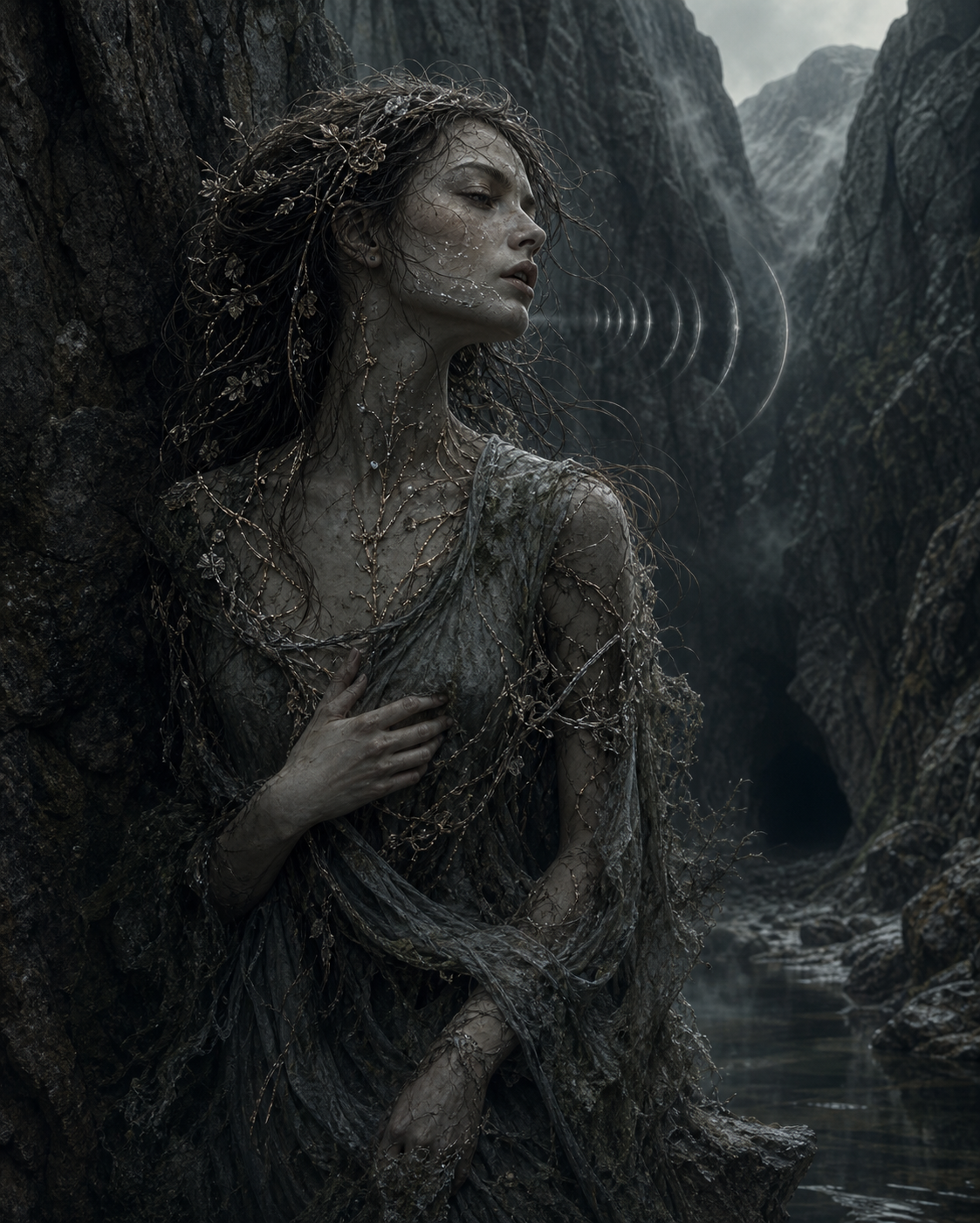
Echo is a mountain nymph whose myth explains a voice that survives as repetition. She is tied to Hera's anger, Narcissus, and the ache of being heard only in fragments — a story about what remains when the body is gone.
Story shape
Voice after the body fades
In the best-known version, told by Ovid, Echo is a nymph who talks too much — or rather, who uses speech to distract Hera while Zeus pursues other nymphs. When Hera discovers the trick, she curses Echo to repeat only the last words spoken by others, never to initiate speech again.
Stripped of her voice, Echo falls in love with Narcissus, the beautiful youth who loves only himself. She follows him through the woods, able only to return his calls, never to declare her own desire. When he rejects her, she retreats into a cave and wastes away until nothing remains but bone and voice.
The story makes a natural acoustic phenomenon — the mountain echo — feel intimate and wounded. It is not merely physics. It is a woman reduced to repetition, a body that faded while sound persisted. Grief, punishment, and landscape merge into a single image: call out in a ravine, and something answers, but only with your own words thrown back.
Echo shows how nymph myths turn landscape effects into emotional presences.
Her myth is a study in diminishment: first speech, then body, then only acoustic residue. For Nymphine, she demonstrates that nymph stories do not always end in glorious transformation. Sometimes they end in attenuation — and the landscape keeps the scar. Every echo in a mountain gorge carries a trace of this older logic: the place remembers a voice that once was whole.
Tradition boundary
Greek nymphs are minor divinities tied to animate landscape: groves, springs, caves, mountains, and sea foam.