Greek · Naiad and huntress
Cyrene
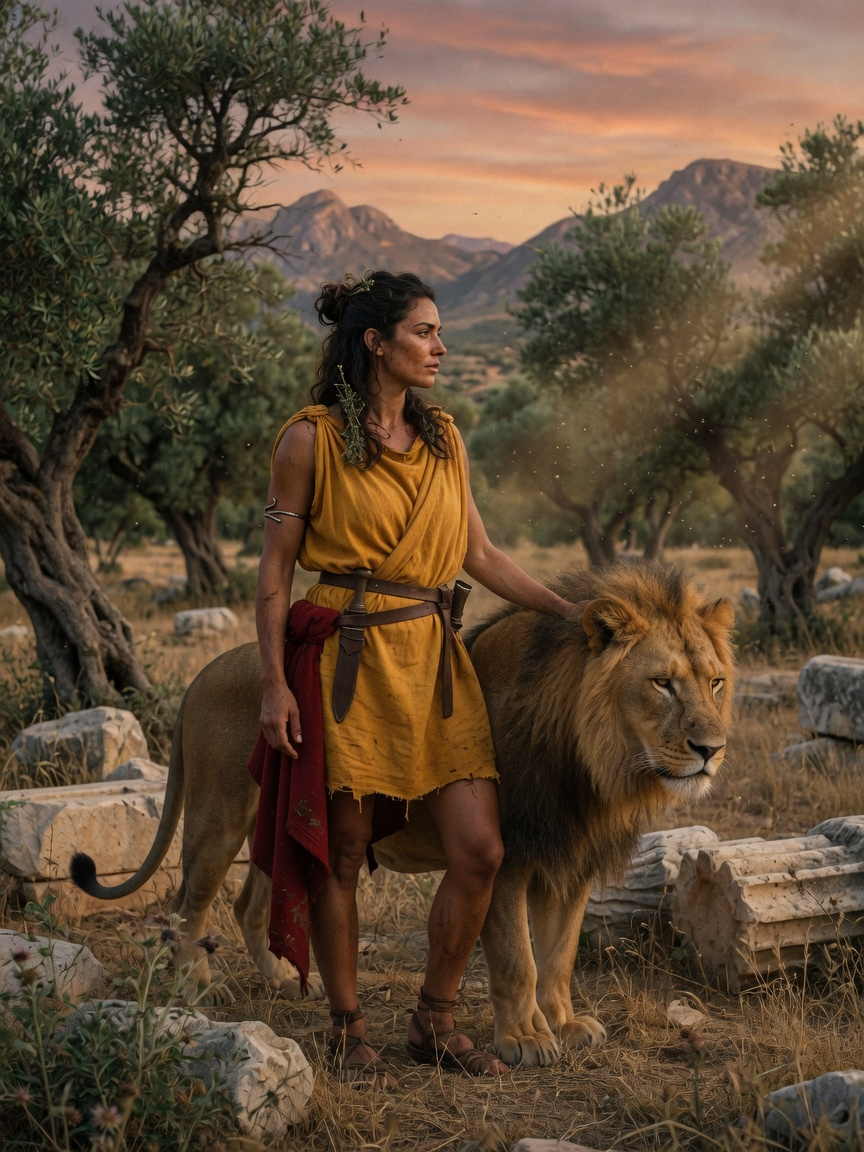
Cyrene was a Thessalian huntress nymph who wrestled a lion bare-handed and became the namesake of a Greek city in Libya. Her myth turns wilderness, violence, and desire into founding legend.
Story shape
A nymph who founds a city
Pindar and Apollonius tell how Apollo saw Cyrene in the mountains of Thessaly, not dancing in a soft grove but fighting a lion without weapons, her strength matched to the animal's. The god was struck — not by delicacy, but by ferocity — and carried her to Libya, where she became the founding spirit of a city that bore her name.
At Cyrene, a sacred spring called the Fountain of Apollo was central to civic life. The nymph was not merely a romantic episode in a god's biography. She was the mythic authorization of a colony, the wild woman whose conquest of wilderness became the origin story of urban order at the edge of the known world.
Unlike nymphs who survive only through transformation or tragedy, Cyrene's myth ends in foundation. She becomes a place, a polis, a political memory — but she arrives there through combat, not compliance.
Cyrene expands the Greek nymph beyond the pursued and the transformed. She is chosen for strength, carried across the sea, and installed as the genius of a real city.
For Nymphine, she is the nymph as colonizer and civic ancestor — proof that the tradition could imagine female wilderness power not only as something to flee from or mourn, but as the force that makes a settlement possible.
Tradition boundary
Greek nymphs are minor divinities tied to animate landscape: groves, springs, caves, mountains, and sea foam.