Roman · Camena and spring nymph
Egeria
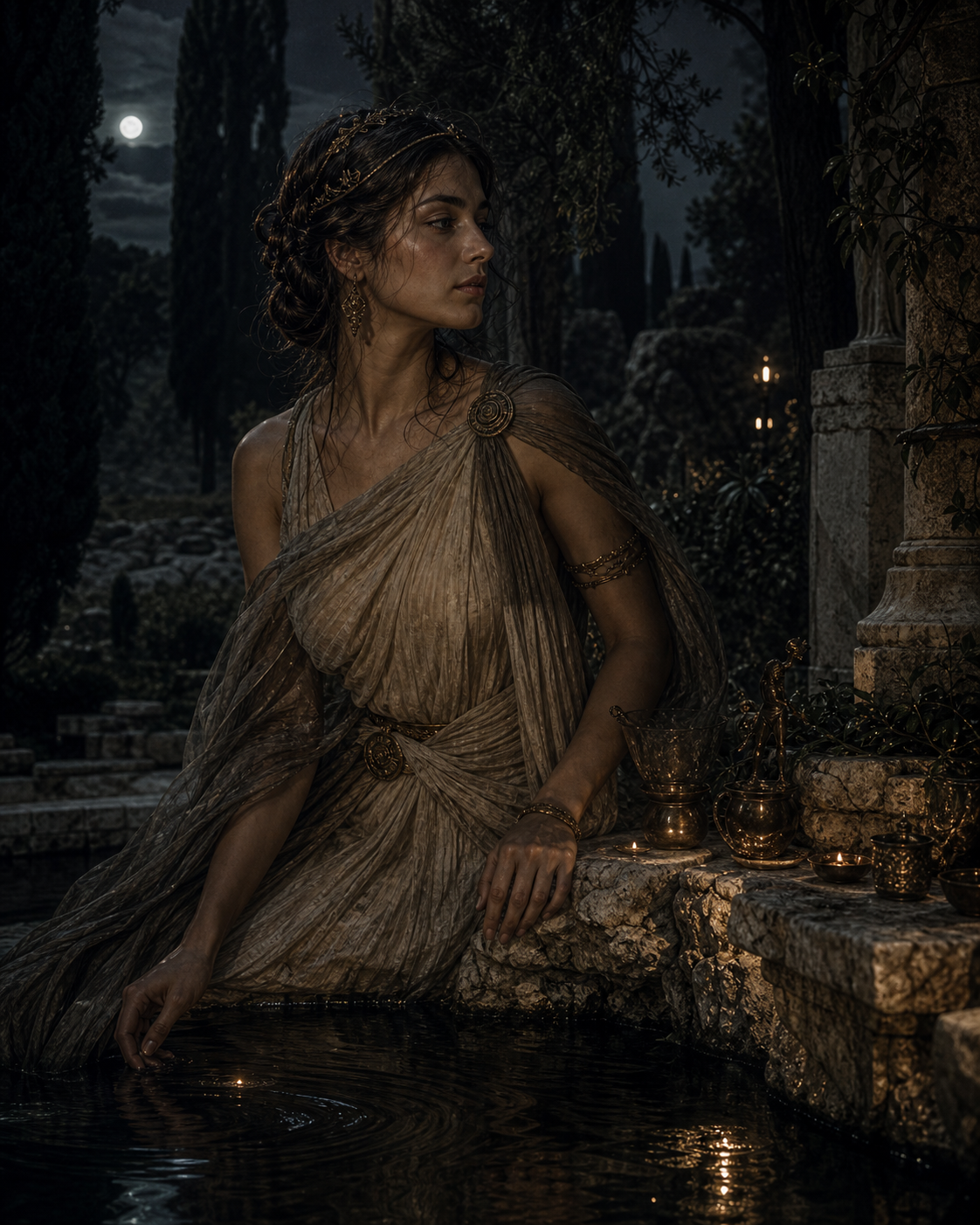
Egeria is a Roman nymph or Camena associated with sacred springs and counsel. Tradition links her to Numa Pompilius, Rome's second king — the quiet intelligence behind early Roman law and ritual.
Story shape
Water as wisdom
Roman legend says Numa Pompilius, successor to Romulus, received guidance from Egeria in a sacred grove near Rome. She appeared to him at night, instructing him in religious rites, calendar reforms, and the institutions that would distinguish Roman civilization from mere conquest.
Whether read as divine consort, muse, or political symbol, Egeria binds water to law, ritual, and the ordered memory of Rome. After Numa's death, some traditions say she wept until she became a spring — the familiar pattern of nymph becoming landscape, but here charged with civic rather than erotic meaning.
Her shrine at Aricia, in the grove of Diana Nemorensis, was a real pilgrimage site. Roman writers treated her as historical infrastructure: the kind of divine counsel that makes a city possible. She is less a victim of pursuit than an advisor whose presence legitimizes power.
Egeria shows the Roman nymph as an intelligence of place, shaping institutions rather than merely decorating scenery.
Where Greek nymphs often appear in stories of flight and transformation, Egeria appears in stories of foundation and governance. For Nymphine, she represents the Roman tendency to make sacred landscape civic — to place a spring at the origin of law, and to believe that a city's rituals were taught by a woman at the water's edge.
Tradition boundary
Roman nymphs often gather around springs, groves, prophecy, healing, and the political imagination of early Rome.