Roman · Nymph of the underworld
Lara
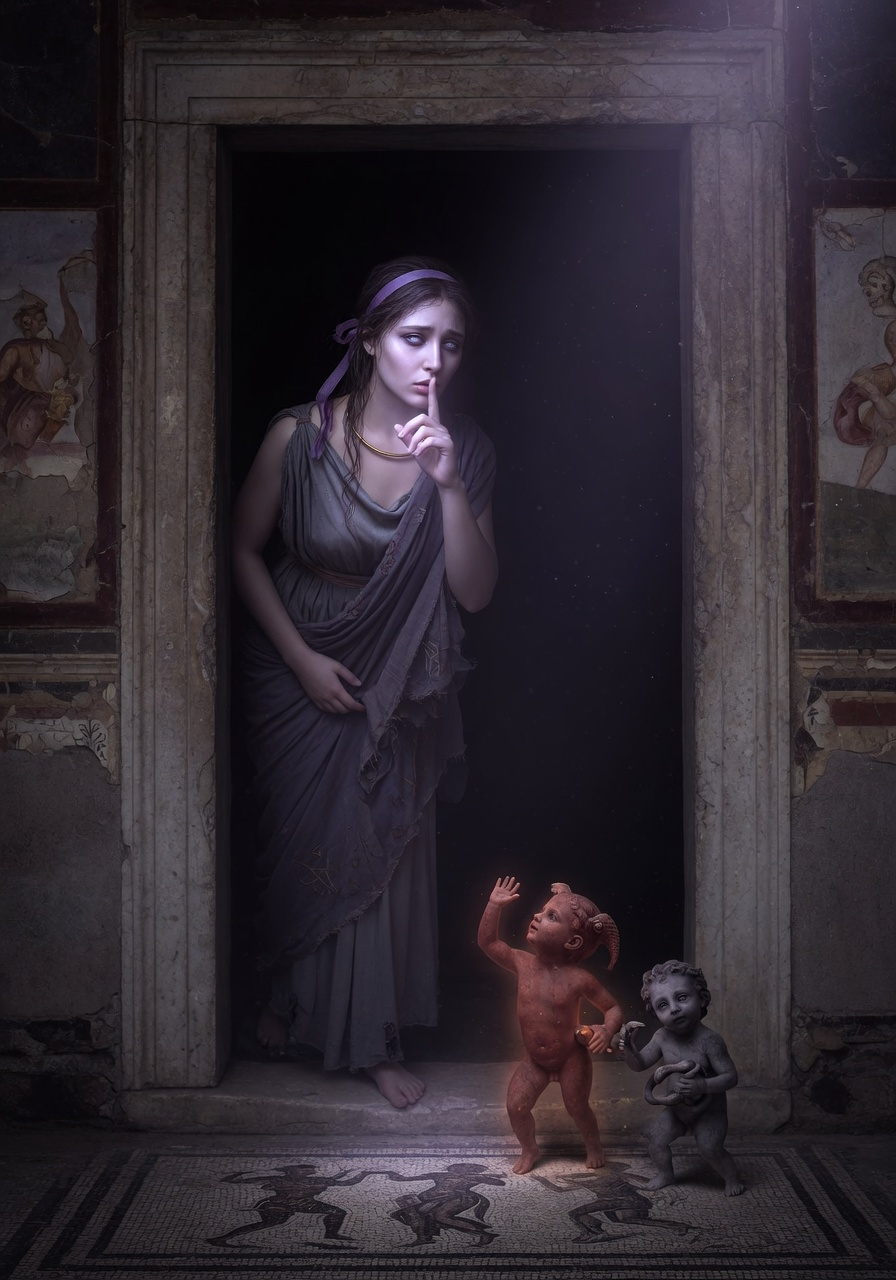
Lara, also called Larunda or Muta, was a nymph who spoke too much and was punished with the loss of her tongue before becoming mother of the protective Lares — silence as both wound and origin.
Story shape
The tongue cut out that still protects the house
Lara was a talkative nymph, a daughter of the river Almo, who served as Juturna's companion. When Jupiter pursued Juturna, Lara warned her sister and ran to reveal the god's intentions to anyone who would listen. Jupiter's response was brutal: he ordered Mercury to take her to the underworld, and before she left, he tore out her tongue.
On the journey, Mercury raped her. From that union came the Lares, the guardian spirits who protect Roman households, crossroads, and thresholds. Lara herself became Larunda, the silent one — Muta, the mute nymph — associated with the underworld and with speech that has been forcibly ended.
The myth is disturbing and has been read many ways: as etiology for household gods, as a warning about gossip, as a story about the violence beneath Roman domestic piety. What is clear is that Lara's silence is not peaceful. It is enforced, and from it came the small gods who watch every Roman doorway.
Lara embodies the Roman understanding that some powers are born from violation and enforced silence. She is the dangerous truth that must be kept quiet, yet still watches over every threshold.
She shares a root with Juturna — sisters in water, divided by what they knew and what they said — but her fate is darker. For Nymphine, Lara is the Roman nymph at her most unsettling: not a spring or a grove, but the origin story of household protection written in tonguelessness and assault. She reminds us that domestic gods do not always have gentle origins.
Tradition boundary
Roman nymphs often gather around springs, groves, prophecy, healing, and the political imagination of early Rome.