Greek · Naiad
Salmacis
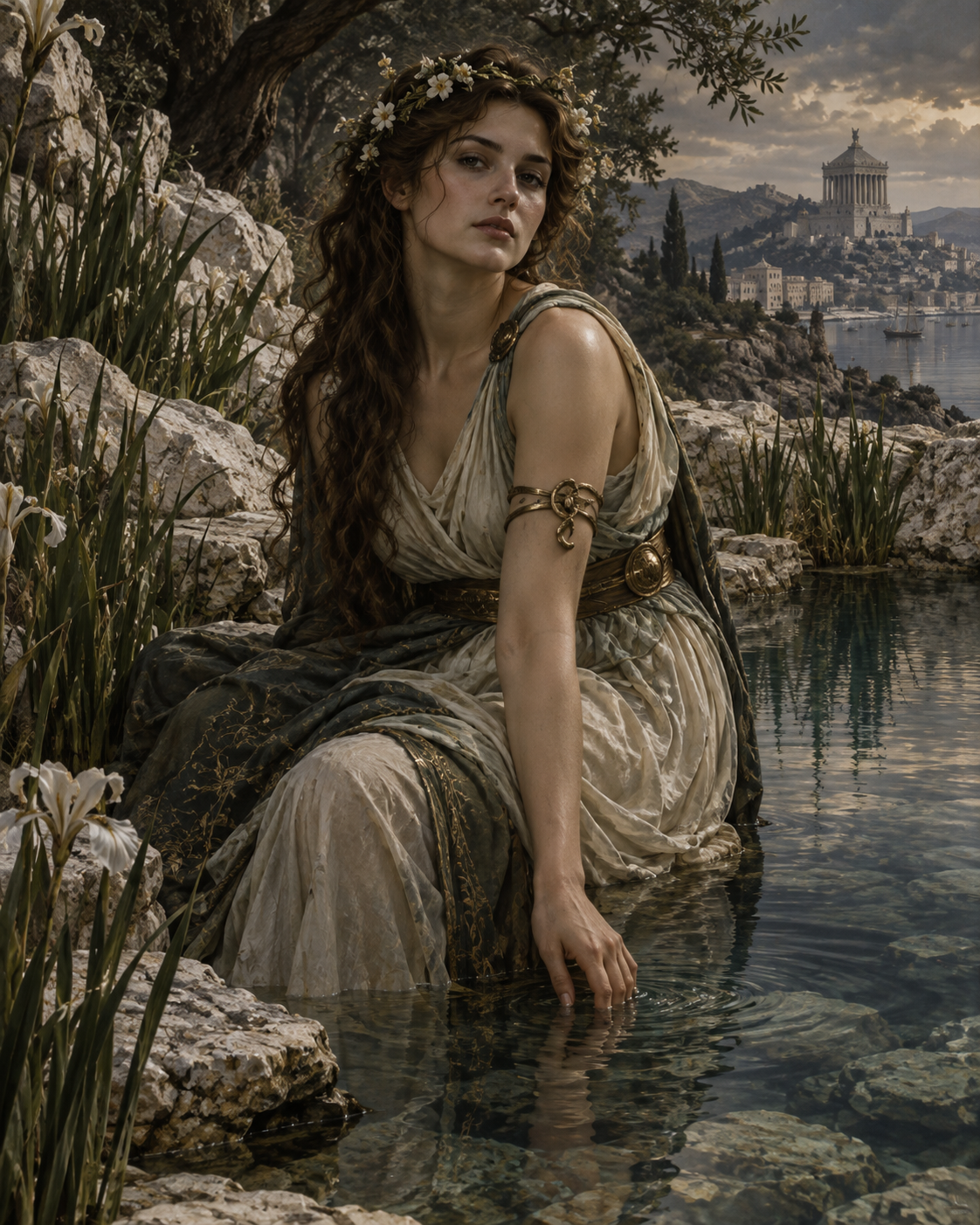
Salmacis is the nymph of a Carian pool, best known for Ovid's disturbing account of her encounter with Hermaphroditus.
Story shape
Still water, an irreversible prayer
In the Metamorphoses, Salmacis lives apart from the hunting companions of Diana. When Hermaphroditus enters her pool, she seizes him despite his resistance and asks the gods never to separate them. Their bodies are joined.
Ovid connects this transformation with the pool's legendary effect on those who bathe there. It is one ancient explanation of a place and a divine figure, rather than a description of real human bodies.
The encounter involves coercion, not mutual romance. Reading it carefully leaves room to consider desire and bodily autonomy without treating an ancient transformation myth as an explanation of modern gender or intersex identities.
Ancient accounts
Tradition boundary
Greek nymphs are minor divinities tied to animate landscape: groves, springs, caves, mountains, and sea foam.