Greek · Naiad
Syrinx
Syrinx was a chaste Arcadian nymph who fled the god Pan and was transformed into the reeds from which he made his pipes — a myth of music born from pursuit and loss.
Story shape
The voice that became music through loss
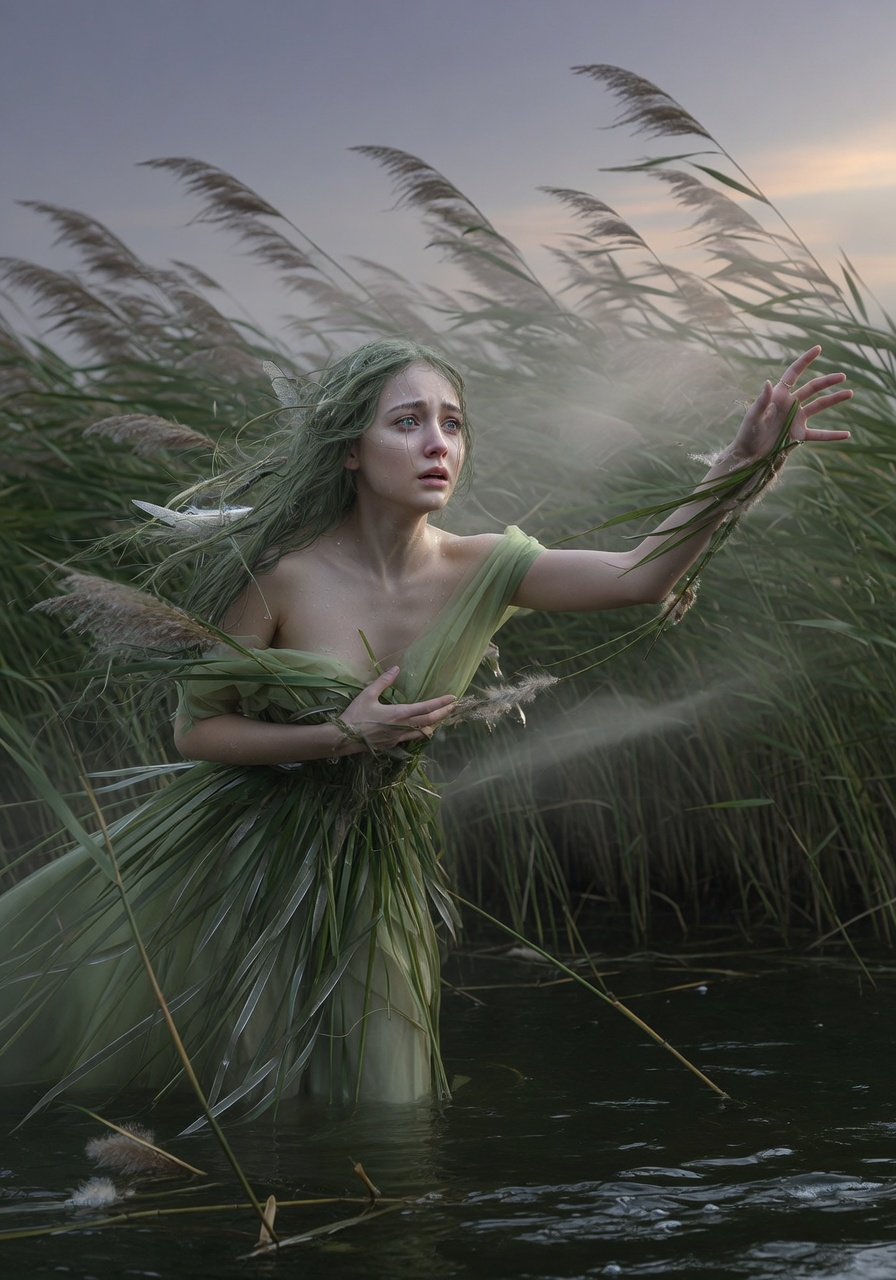
Syrinx was an Arcadian nymph, devoted to Artemis and to chastity, who caught the attention of Pan, the goat-footed god of wild places. When he pursued her along the river Ladon, she ran until she reached a bank where escape seemed impossible.
She prayed to the river nymphs for help and was transformed into marsh reeds — tall, hollow stalks that sway in wind. Pan reached to embrace her and found only plants. Frustrated, grieving, or inspired — the sources do not quite say which — he cut the reeds at different lengths, bound them with wax, and created the pan pipes, the syrinx, an instrument that sighs when breath moves through it.
The myth gives us one of antiquity's most enduring images: music made from the body of the pursued. Every time Pan plays, or a shepherd blows into reeds by a riverbank, the story suggests, something of Syrinx remains — not as a person, but as sound.
Syrinx shows the nymph tradition at its most musical and most violent: beauty preserved only as an instrument played by the one who destroyed her form.
Her story parallels Daphne and Arethusa — flight, transformation, survival through change — but the outcome is stranger. She becomes not a tree or a spring but raw material for art. For Nymphine, Syrinx is the nymph as raw material, the uncomfortable truth that mythic preservation sometimes means being remade into something another can use.
Tradition boundary
Greek nymphs are minor divinities tied to animate landscape: groves, springs, caves, mountains, and sea foam.