Greek · Nereid
Thetis
Thetis is a Nereid, a sea nymph of unusually large mythic importance. She is the mother of Achilles and a figure of prophecy, protection, and divine constraint — a nymph whose power reaches the center of epic war.
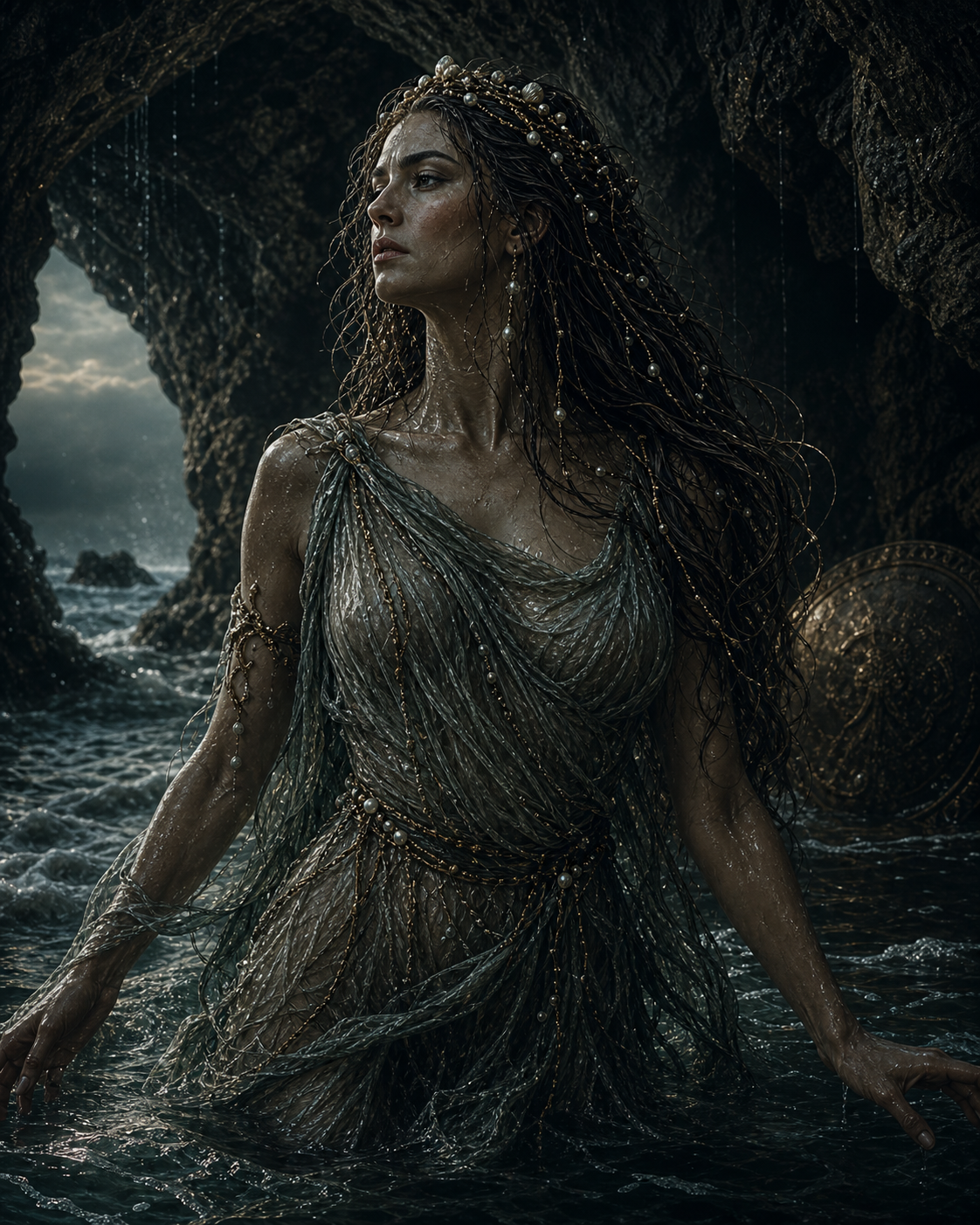
Story shape
A mother with oceanic power
Thetis is courted by Zeus and Poseidon, both warned by prophecy that her son would be greater than his father. To avoid cosmic upheaval, she is given in marriage to the mortal Peleus — a sea nymph bound to a human king, a goddess made to kneel.
At their wedding, the seeds of Troy are sown: the uninvited Eris, the golden apple, the judgment of Paris. Thetis bears Achilles, dips him in the Styx to make him invulnerable, and later watches him choose a short glorious life over long obscurity. When he dies at Troy, she mourns in the depths, rising from the sea to comfort him, to armor him, to grieve what prophecy always knew would happen.
Her sea power does not free her from grief. In the Iliad she moves between ocean caves and the violence of human war, negotiating with Hephaestus, pleading with Zeus, doing what mothers do when fate has already been written. She is formidable — but formidability does not mean control.
Thetis expands the word nymph beyond delicacy: she is political, prophetic, maternal, and formidable.
Nereids are sea nymphs, yes, but Thetis proves the category can hold tragedy at epic scale. She is not a backdrop to a hero's story; she is the condition of his existence, the divine parent who cannot save her child from the destiny she helped shape. For Nymphine, Thetis is the reminder that nymphs are not only landscape spirits — they are kin to gods, married into mortal lines, and entangled in the machinery of fate.
Tradition boundary
Greek nymphs are minor divinities tied to animate landscape: groves, springs, caves, mountains, and sea foam.