Roman · Nymph and prophetess
Carmenta
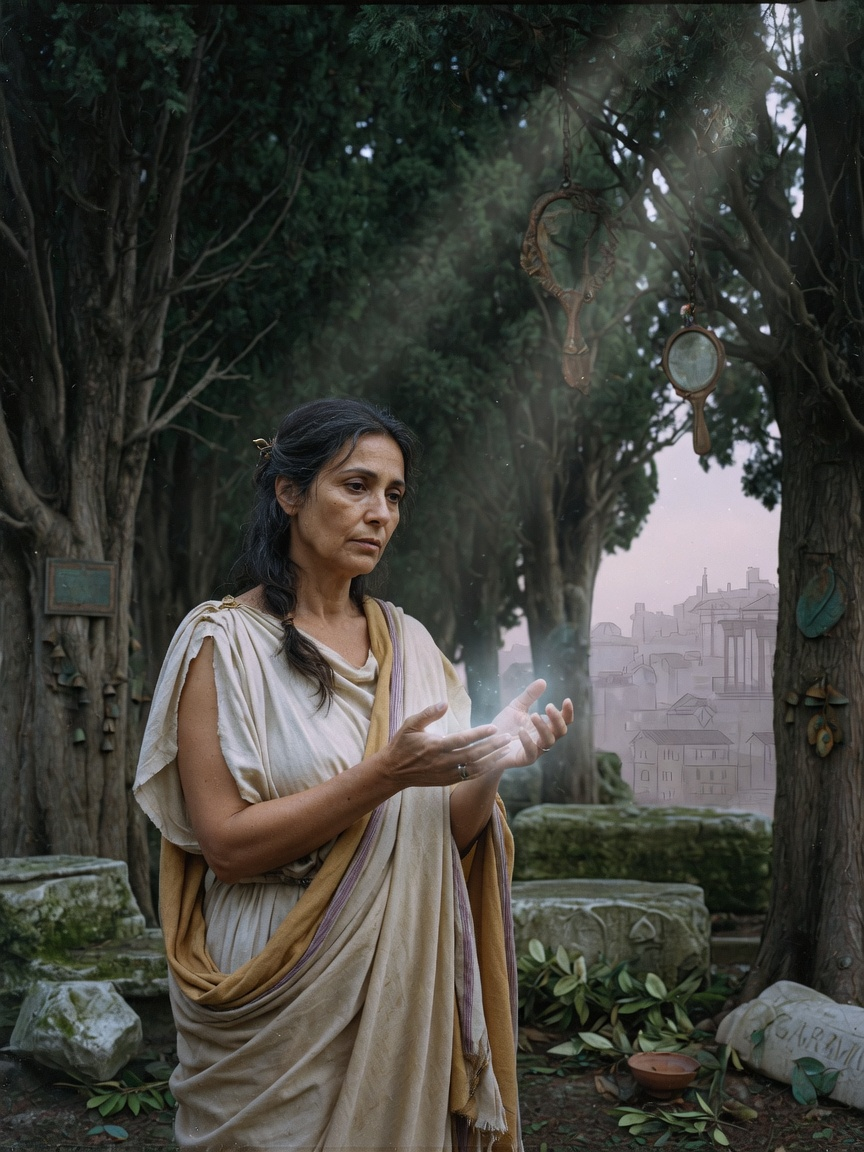
Carmenta is a Roman nymph and prophetess, mother of Evander and singer of fate before Rome was Rome. Tradition credits her with sacred song, early writing, and the mythic arrival of Trojan ancestry in Italy.
Story shape
Song before the city has walls
Roman legend places Carmenta in the mythic prehistory of the city. She is a nymph of prophetic song, mother of Evander, who leads an Arcadian settlement to the future site of Rome. Virgil and later antiquarians treat her as one of the archaic powers beneath the city's later grandeur — a figure who sings what will happen before walls exist to hear it.
She is associated with childbirth, fate, and the kind of wisdom that arrives as melody rather than decree. Some traditions link her name to carmen, song or spell, and credit her with early letters or ritual language. Whether read as goddess, nymph, or cultural memory, she embodies the Roman belief that a city begins not only with swords, but with voices that know the future.
Carmenta belongs to the same Roman world as Egeria: counsel given at the edge of civilization. But where Egeria instructs a king in law, Carmenta sings a settlement into being. She is prophecy as lullaby and founding charter at once.
Carmenta widens the Roman nymph from spring and fountain to voice and origin — the sound that precedes architecture.
For Nymphine, she is the matriarch of Roman mythic memory: a nymph whose song is the earliest layer of the city's story. She reminds us that Roman landscape spirits were not only water. Some were utterance, the breath before stone.
Tradition boundary
Roman nymphs often gather around springs, groves, prophecy, healing, and the political imagination of early Rome.