Norse analogue · Wave-maiden
Hefring
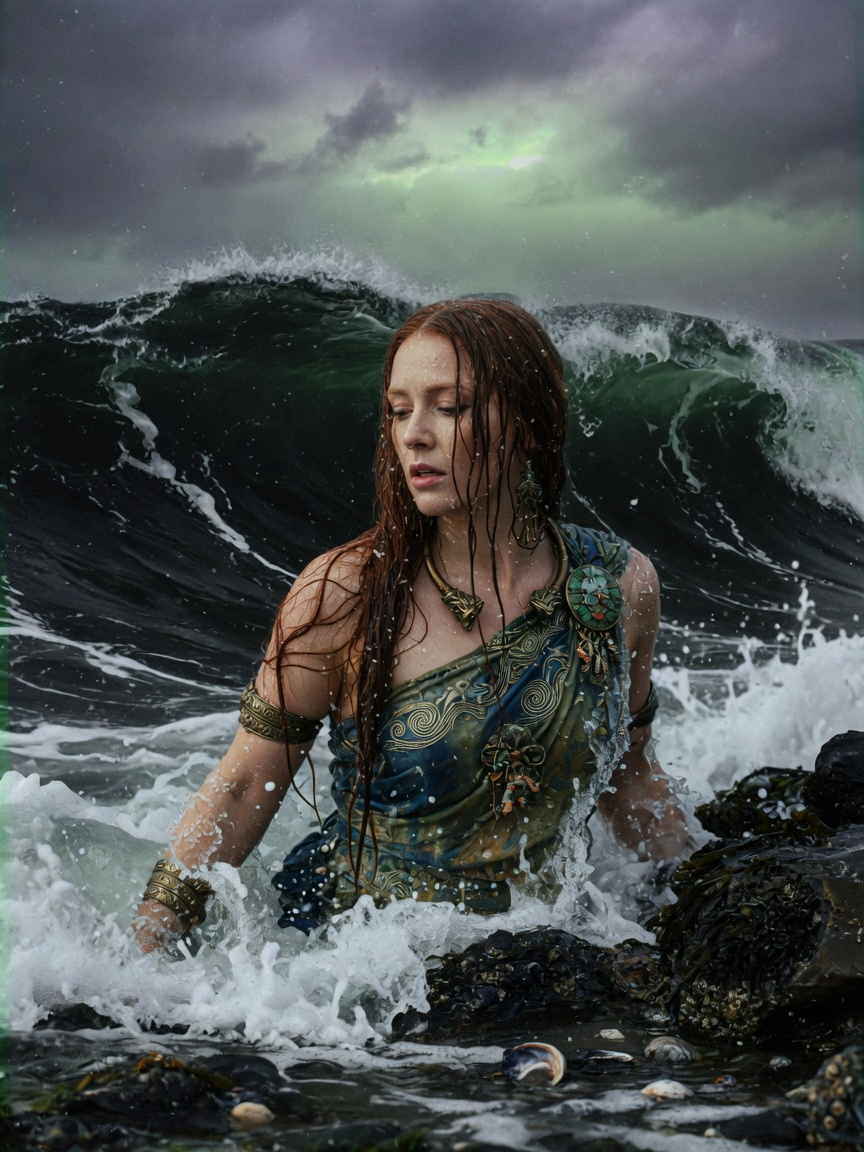
Hefring is one of Aegir and Ran's wave-maidens, her name tied to the heaving motion of the sea — the slow lift of water gathering force before it breaks. She is surge made visible, the breath the ocean takes before it strikes.
Story shape
The lift before the fall
The wave-maidens appear in Old Norse verse as a sisterhood of named waters, each embodying a distinct motion of the open sea. Where Bylgja names the billow and Kolga the cold, Hefring names the heave — the upward drive of a wave that has not yet crested, the moment water seems to inhale.
In skaldic lists she stands among her sisters as one of nine, a daughter in Aegir's hall who is also a weather-event at sea. Sailors who knew these names were not indulging in decorative poetry. They were reading the ocean as a household of forces, each with its own temperament and timing.
Hefring survives without a long narrative plot, but her name preserves a precise observation: the sea does not only crash. It rises first. That interval — the lift, the gathering, the held breath before violence — is hers.
Hefring completes the wave-maiden grammar that Bylgja and Kolga begin: not one kind of water, but a family of motions, each named and therefore acknowledged.
For Nymphine, she is the northern nymph at her most elemental — a personification so close to physics that story barely needs to attach. To know her name is to know how Old Norse poets watched the sea: not as scenery, but as syntax.
Tradition boundary
Old Norse sources do not have a direct equivalent to the classical Greek nymph. The northern figures gathered here are wave-maidens, forest beings, and nature spirits whose lives are bound to water, weather, and hidden land.