Scandinavian folklore analogue · Forest spirit
Huldra
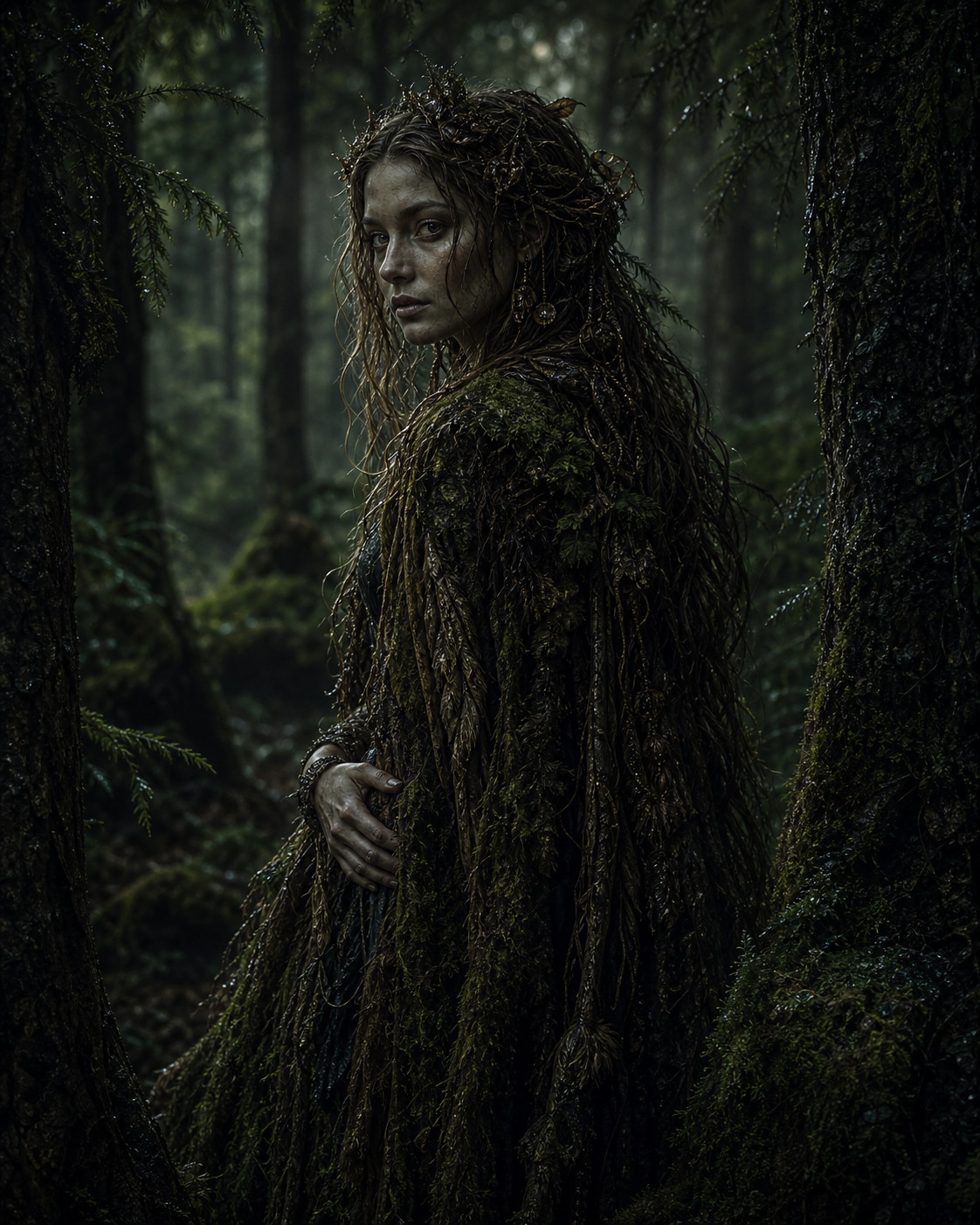
The Huldra belongs to Scandinavian folklore rather than ancient classical nymph taxonomy. She is a hidden woman of the forest — alluring, dangerous, and bound to wild land in ways that outlast any single telling.
Story shape
Beauty, concealment, and the forest watching back
Stories of the Huldra vary across Norway, Sweden, and neighboring traditions, but certain images recur. She is beautiful from the front and hollow or tailed from behind. She lives in the deep forest or beneath a mountain, associated with cattle, hidden pastures, and the uncanny sense that the woods are watching.
Some tales make her a guardian of animals, punishing hunters who take more than their share. Others describe her luring men into the green dark, where time bends and the path home disappears. In many versions, she is not simply evil — she is the forest enforcing its own etiquette, teaching that wild places have owners even when no human deed grants them.
The Huldra stands here as a woodland analogue: not Greek in origin, but unmistakably bound to wild place. She belongs to a living folklore tradition that persisted long after the conversion of Scandinavia, adapting old land-beliefs into stories farmers still told by firelight.
She gives the northern grove a forest voice: intimate, watchful, and stranger than the sea.
Where the wave-maidens personify open water and weather, the Huldra personifies enclosure — the forest as a room you enter at your own risk. For Nymphine, she proves that nymph-adjacent thinking did not end with medieval manuscripts. The impulse to see land as inhabited, gendered, and morally alert survived in Scandinavian folk belief well into the modern era.
Tradition boundary
Old Norse sources do not have a direct equivalent to the classical Greek nymph. The northern figures gathered here are wave-maidens, forest beings, and nature spirits whose lives are bound to water, weather, and hidden land.