Norse sea figure · Sea goddess
Ran
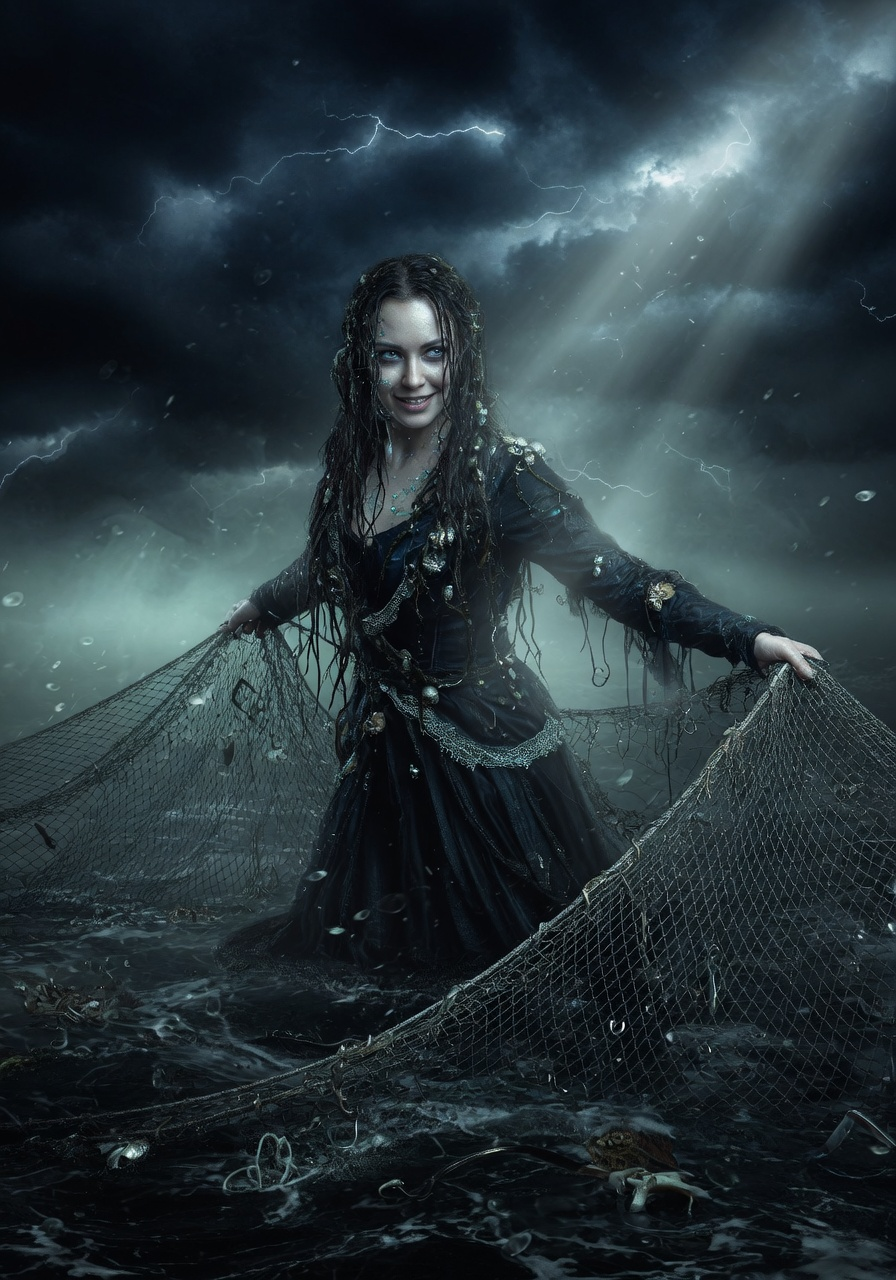
Ran is the wife of Aegir and the dread mistress of the sea who drags the drowned down to her hall with an insatiable net. She is the mother of the wave-maidens and the collector of everything the ocean refuses to return.
Story shape
The net that gathers what the sea refuses to return
In Old Norse poetry Ran is both host and predator. She waits at the sea floor with her net, ready to snare sailors who fall overboard, ships that founder, anyone the waves claim. Those who drown are said to feast in her underwater hall — a hospitality purchased with their lives.
She is married to Aegir, the sea-giant who brews ale for the gods and welcomes them to his hall beneath the waves. While Aegir represents the sea as feast and fellowship, Ran represents the sea as accounting — what it takes, what it keeps, what it drags down to darkness. Her daughters, the wave-maidens, are the surface expressions of a household whose depths are far more dangerous.
Skaldic verse advises sailors to carry gold, so that if Ran catches them, they can offer payment and perhaps win release. The detail is telling: the sea is not mindless. It has a mistress, a economy, a net that can be negotiated with if you have something worth trading.
Ran gives the northern sea its most explicit hunger. She is not a passive wave but an active claim on human life, a goddess who keeps accounts in the deep.
For Nymphine, Ran is the matriarch of the northern waters — the figure who explains why the sea-feast and the sea-grave are the same address. She completes the household that Bylgja and Kolga belong to, giving the wave-maidens a mother who is older, darker, and far less picturesque. The ocean is not only weather and kinship. It is also collection.
Tradition boundary
Old Norse sources do not have a direct equivalent to the classical Greek nymph. The northern figures gathered here are wave-maidens, forest beings, and nature spirits whose lives are bound to water, weather, and hidden land.