Norse analogue · Wave-maiden
Kolga
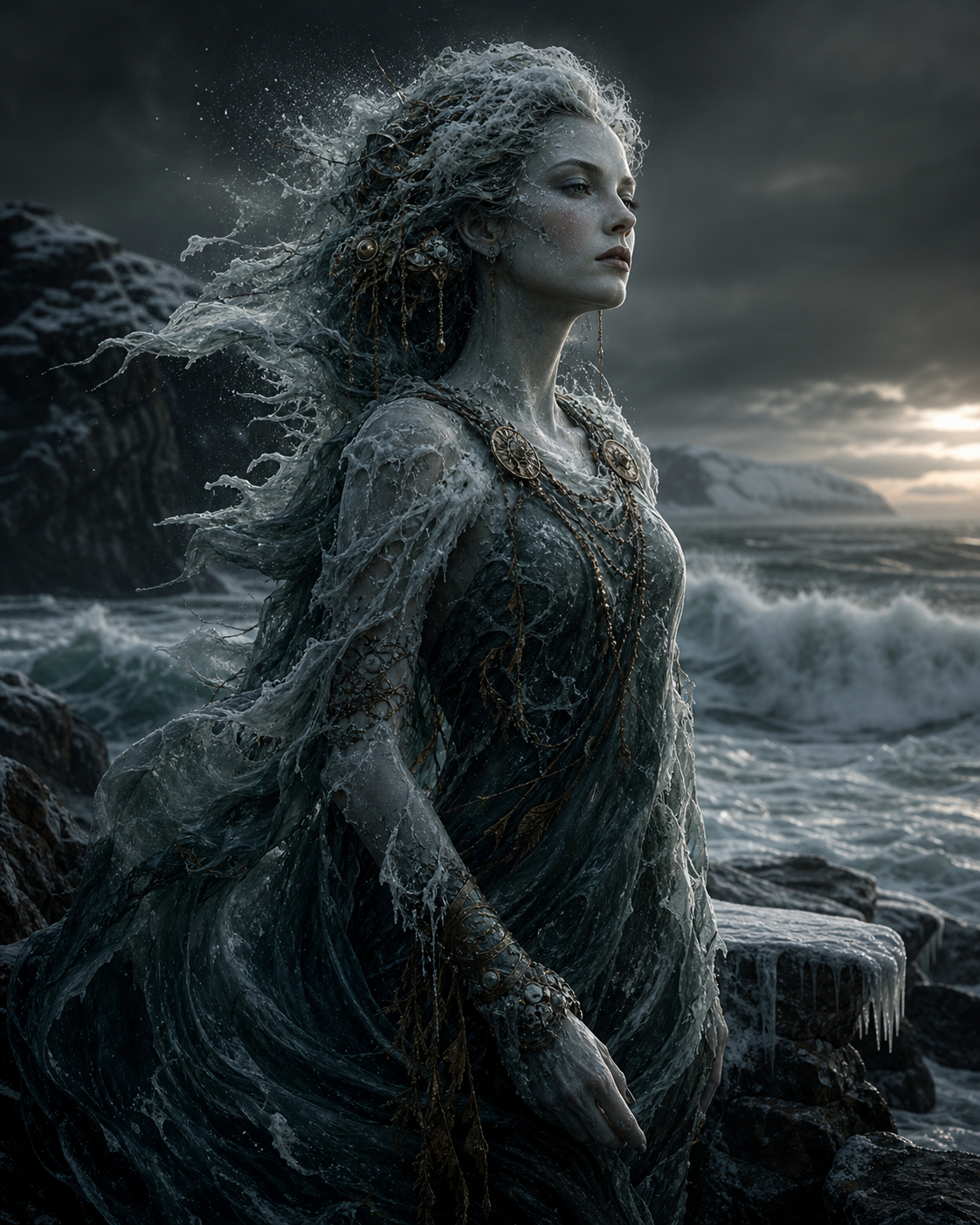
Kolga is another of Aegir and Ran's wave-maidens. Her name is associated with coldness — the chill that rides a wave in northern latitudes — making her a compact image of the sea's physical bite.
Story shape
The sea as chill breath and hard glitter
Like her sisters, Kolga survives mostly as a name and poetic personification in Old Norse sources. She appears in lists of the wave-maidens, one figure among many, each embodying a distinct quality of ocean movement. Kolga's particular quality is cold: not the abstract cold of winter, but the specific shock of seawater that steals breath.
That spareness is part of her power. She is not a biography but an atmosphere — the feeling of surf that has traveled from ice, the metallic taste of salt on a wind that never warmed. Among northern sea-spirits, Kolga marks the elemental edge where water becomes almost mineral, almost weapon.
In the mythology of Aegir's hall, the wave-maidens serve ale to gods and drowned men alike. Kolga's presence at that table reminds us that northern hospitality and northern danger share the same doorway. The sea offers drink; the sea also takes.
Kolga anchors the darker, northern side of Nymphine: nature is beautiful, but it is not obliged to be gentle.
Where Greek nymphs often mediate between gods and mortals through desire or transformation, Kolga mediates through temperature and threat. She is a reminder that the northern imagination did not sentimentalize landscape. The sea was kin, yes — but kin could kill you, and the cold was part of the greeting.
Tradition boundary
Old Norse sources do not have a direct equivalent to the classical Greek nymph. The northern figures gathered here are wave-maidens, forest beings, and nature spirits whose lives are bound to water, weather, and hidden land.